Ask any professional colored pencil artist which pencil they'd take to a desert island, and a significant number will say Faber-Castell Polychromos. They've been the benchmark for serious colored pencil work for decades — and for good reason.
But Polychromos aren't just "better Prismacolors." They work differently, they feel different, and they reward a different technique. Here's everything you need to know before you buy — and how to get stunning results once you do.
Oil-Based vs. Wax-Based: Why It Matters
The most important thing to understand about Polychromos is that they use an oil-based binder rather than a wax binder like Prismacolor. This single difference creates a cascade of effects:
No wax bloom. Because there's no wax migrating to the surface, Polychromos never develop that white haze that Prismacolor users have to wipe away. Your finished artwork looks exactly the same the day you finish it as it will years later.
Harder, more controlled core. The oil binder creates a firmer core that holds a sharper point longer. This makes Polychromos exceptional for fine detail work, precise linework, and realistic textures. Where a Prismacolor might smear slightly with a heavy hand, a Polychromos stays put.
Better lightfastness. Faber-Castell rates the lightfastness of every Polychromos color on a 1–8 star scale (most are 7–8 stars, meaning they'll last 100+ years without significant fading). This is the pencil for artwork you're planning to frame, sell, or pass down.
Slightly more effort to blend. The firmer core means you need more layers and more pressure to achieve the buttery blends that Prismacolor produces almost effortlessly. Polychromos rewards patience and technique — the more layers you build, the richer and more luminous the result.
The 120-Color Range: How It's Organized
Faber-Castell uses a three-digit numbering system for Polychromos that has a loose spectral logic — colors in the 100s are blues, 200s are greens, 300s are earth tones, and so on — but with enough gaps and inconsistencies that it's not reliable for guessing.
What the range does exceptionally well:
Blues and violets: The Polychromos blue range is widely considered one of the best in any colored pencil line. Phthalo Blue (110), Cobalt Blue (143), Ultramarine (120), and Violet (138) form a rich, harmonious family that blends beautifully in transitions.
Earth tones: Van Dyck Brown (176), Burnt Sienna (283), and Caput Mortuum Violet (169) are among the most loved colors in the entire line — warm, rich, and versatile for wood, hair, skin, and landscapes.
Greens: More muted and sophisticated than Prismacolor's greens, which makes them ideal for realistic foliage rather than vibrant illustrative work.
Skin tones: The flesh tone range (177, 178, 132) is excellent for realistic portraits, particularly for warm Mediterranean and deeper skin tones.
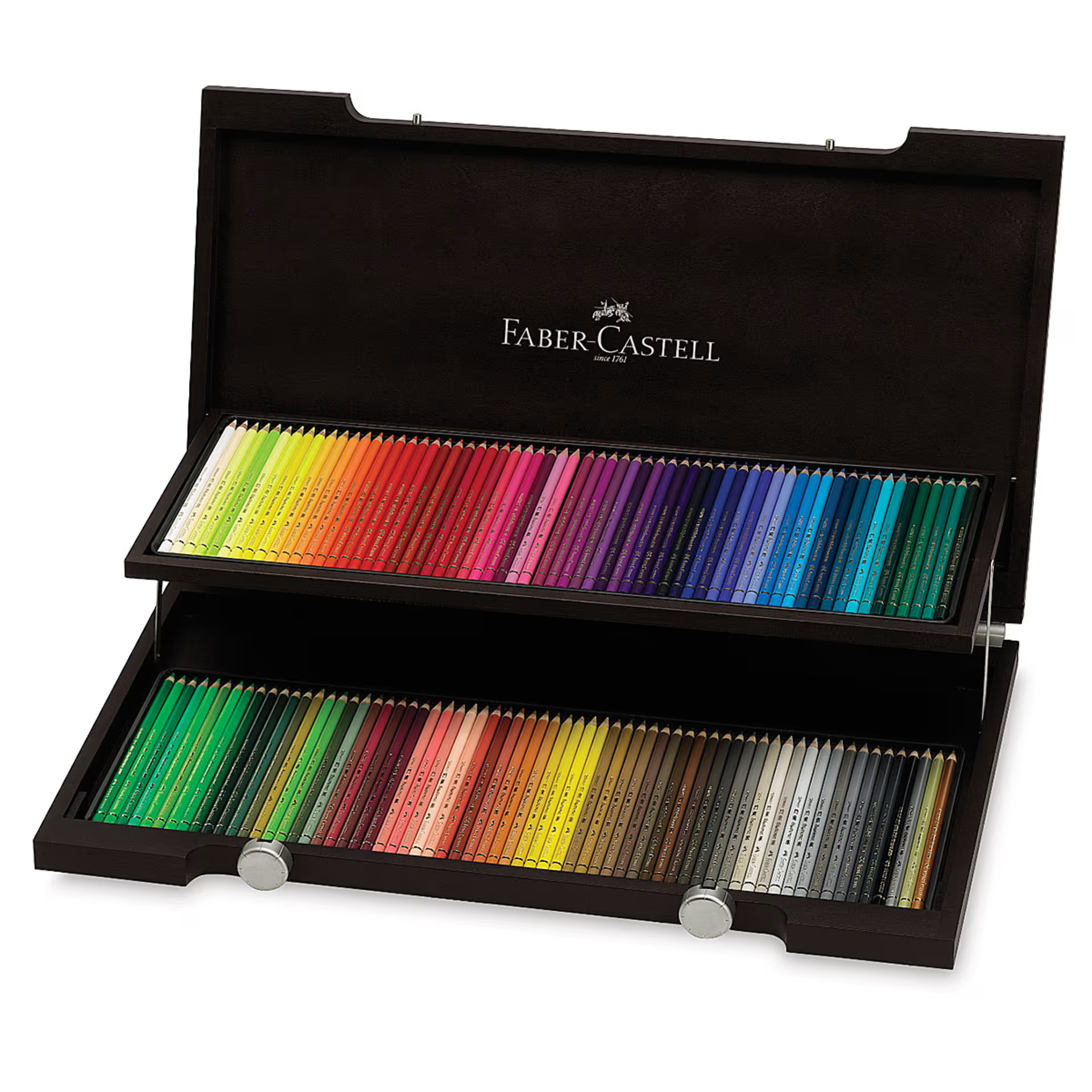
Crafted with the finest pigments, Faber-Castell® Polychromos colored pencils deliver unparalleled vibrancy, color intensity and lightfastness
The Technique That Unlocks Polychromos
Because Polychromos have a harder core, the technique that gets the best results is different from Prismacolor:
More layers, less pressure. Aim for 6–10 light layers rather than 2–3 heavy ones. Each layer adds color and begins to fill the paper tooth. By layer 6, the color richness is stunning.
Circular strokes for coverage: Small, overlapping circular strokes eliminate visible stroke lines and build a smooth, even surface faster than back-and-forth hatching.
Solvent finishing: Like Prismacolor, Polychromos respond beautifully to odorless mineral spirits — but because the core is oil-based, the effect is even smoother. A light solvent wash over 4–5 layers creates an almost watercolor-like base you can continue layering over.
Mixing with Prismacolor: This is a legitimate technique used by many professional artists. Use Polychromos for the detail and fine linework, then add a layer of Prismacolor on top for a buttery, blended finish. The oil-based Polychromos actually works as a slightly resistant base that holds the wax Prismacolor without slipping.
Are Polychromos Worth the Price?
Polychromos cost roughly 2–3x more per pencil than Prismacolor. Whether that's worth it depends entirely on what you're making.
For coloring books, practice work, and art you'll photograph and share: Prismacolor gives you faster, easier blends and costs less. Polychromos may feel like overkill but are just as satisfying.If you are a collector or would like to be, the boxes and cases are also impressive and you can always opt for a smaller tin of 36 pencils.
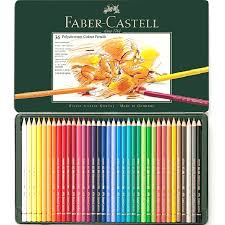
With a smooth color laydown, these pencils blend really well, allowing artists to create seamless transitions
For finished artwork you're framing, selling, or care about long-term: Polychromos are worth every cent. The lightfastness alone justifies the investment for serious work.
For portraits and realistic detail work specifically: Polychromos are the better tool regardless of price — the control they give you for fine hair strands, skin texture, and precise edge work is difficult to match.
Finding Polychromos Matches for Any Color
Following a tutorial that uses Copic or Prismacolor and want to know the closest Polychromos equivalent? Or have a reference photo and want to know exactly which Polychromos pencil number to reach for?
Upload your reference to MyKindofColor and filter by Faber-Castell Polychromos. You'll get the exact pencil number, color name, and match quality rating — without flipping through a physical color chart.
Shop Faber-Castell Polychromos on Amazon →
Find your Polychromos matches →
---
The complete Faber-Castell Polychromos range is indexed in MyKindofColor. Match any photo, hex code, or cross-brand color to the exact Polychromos number.